


If you’re driving and suddenly notice a burning oil smell, it’s easy to feel worried—and for good reason. That sharp, smoky odor is not something to ignore. Sometimes it’s a small issue that’s easy to fix. Other times, it can be an early warning of serious engine trouble.
This guide explains what a burning oil smell means, why it happens, and when it becomes dangerous, all in clear, simple language.
What Does a Burning Oil Smell Actually Mean?
A burning oil smell usually means engine oil is getting hot in places it shouldn’t be. Instead of staying sealed inside the engine, oil may be leaking or dripping onto hot parts like:
- The exhaust manifold
- Turbocharger components
- Engine block surfaces
When oil hits these hot areas, it burns and produces a strong, unpleasant smell that can enter the cabin through vents or open windows.
This smell is never normal, even if the car still drives fine.
Common Causes of Burning Oil Smell in Audi Vehicles
1. Oil Leaks from Valve Cover Gaskets
One of the most common causes in Audi engines is a leaking valve cover gasket.
- Rubber gaskets wear out over time
- Oil seeps out and drips onto hot engine parts
- The smell is strongest after driving or idling
This problem often starts small but gets worse if ignored.
2. Oil Spilled During an Oil Change
Sometimes the cause is simple.
- Oil may spill onto the engine during servicing
- Residual oil burns off over a few drives
- Smell should fade within a few days
If the smell lasts longer than a week, it’s likely not just spilled oil.
3. Turbocharger Oil Leaks
Many Audi models use turbocharged engines, which operate at very high temperatures.
- Worn turbo seals can leak oil
- Oil burns instantly on turbo components
- Smell is often sharp and intense
Turbo-related oil leaks can turn expensive quickly if not repaired early.
4. Crankcase Ventilation (PCV) System Problems
Audi engines rely on a PCV system to manage pressure inside the engine.
- A failed PCV valve increases oil pressure
- Oil gets pushed past seals
- Leaks and burning smells follow
This issue can also cause rough idling and increased oil consumption.
5. Oil Filter or Drain Plug Leaks
After an oil change:
- Loose oil filters
- Damaged drain plug washers
can cause slow oil leaks that drip onto hot surfaces while driving.
Is a Burning Oil Smell Dangerous?
Short Answer: Yes, it can be.
Here’s why a burning oil smell should be taken seriously:
- Fire risk: Oil dripping onto hot exhaust parts can ignite
- Engine damage: Low oil levels lead to poor lubrication
- Costly repairs: Small leaks turn into major failures
Ignoring the smell doesn’t just risk the engine—it risks your safety.
Warning Signs That Mean Immediate Attention Is Needed
Stop driving and get the car checked immediately if you notice:
- Smoke coming from the engine bay
- Oil warning light turning on
- Burning smell getting stronger quickly
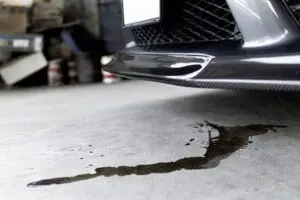
- Oil spots under the car
- Engine running louder or rougher
These signs mean the problem is escalating fast.
Can You Still Drive with a Burning Oil Smell?
In some cases, very short trips may be possible—but it’s risky.
You might be able to drive briefly if:
- The smell is faint
- No warning lights are on
- Oil level is normal
You should not drive if:
- The smell is strong or constant
- Smoke is visible
- Oil level keeps dropping
Even if the car drives “normally,” internal damage may already be starting.
How to Check Basic Things Yourself (Safely)
Before heading to a mechanic, you can do a few simple checks:
Check the Oil Level
- Park on level ground
- Let the engine cool
- Use the dipstick or electronic oil display
Low oil + burning smell = urgent problem.
Look for Visible Leaks
- Check around the engine bay
- Look underneath the car
- Search for fresh oil residue
Never touch hot engine parts.
Notice When the Smell Happens
- Only after driving?
- Worse during acceleration?
- Stronger with AC on?
These details help pinpoint the cause.
How Mechanics Diagnose the Problem
A proper inspection may include:
- Visual leak inspection
- UV dye testing
- PCV system testing
- Turbo seal checks
- Oil pressure testing
Audi engines are tightly packed, so professional diagnosis is often necessary.
Typical Repair Costs (General Ranges)
Costs vary by model and location, but here’s a rough idea:
- Valve cover gasket: Moderate cost
- PCV system repair: Moderate
- Turbo oil leak: High
- Minor oil leaks: Low to moderate
Fixing the issue early almost always saves money.
How to Prevent Burning Oil Smells in the Future
- Use Audi-approved engine oil
- Follow oil change intervals
- Replace gaskets before they fully fail
- Address small leaks immediately
- Don’t ignore warning lights
Preventive care is far cheaper than engine repairs.
Final Verdict: Is It a Serious Engine Warning?
A burning oil smell while driving an Audi is absolutely a warning sign—sometimes minor, sometimes serious, but never something to ignore.
The smell means oil is burning where it shouldn’t be. Even if the car still feels fine, damage may already be happening behind the scenes.
The smartest move is early inspection and repair. Catching the problem now can protect your engine, your wallet, and your safety on the road.
If your Audi smells like burning oil, it’s telling you something important. Listen to it.